
 +91 6295115701
 fitofine.in@gmail.com
 27A, Town Hall Para, Bardhaman, West Bengal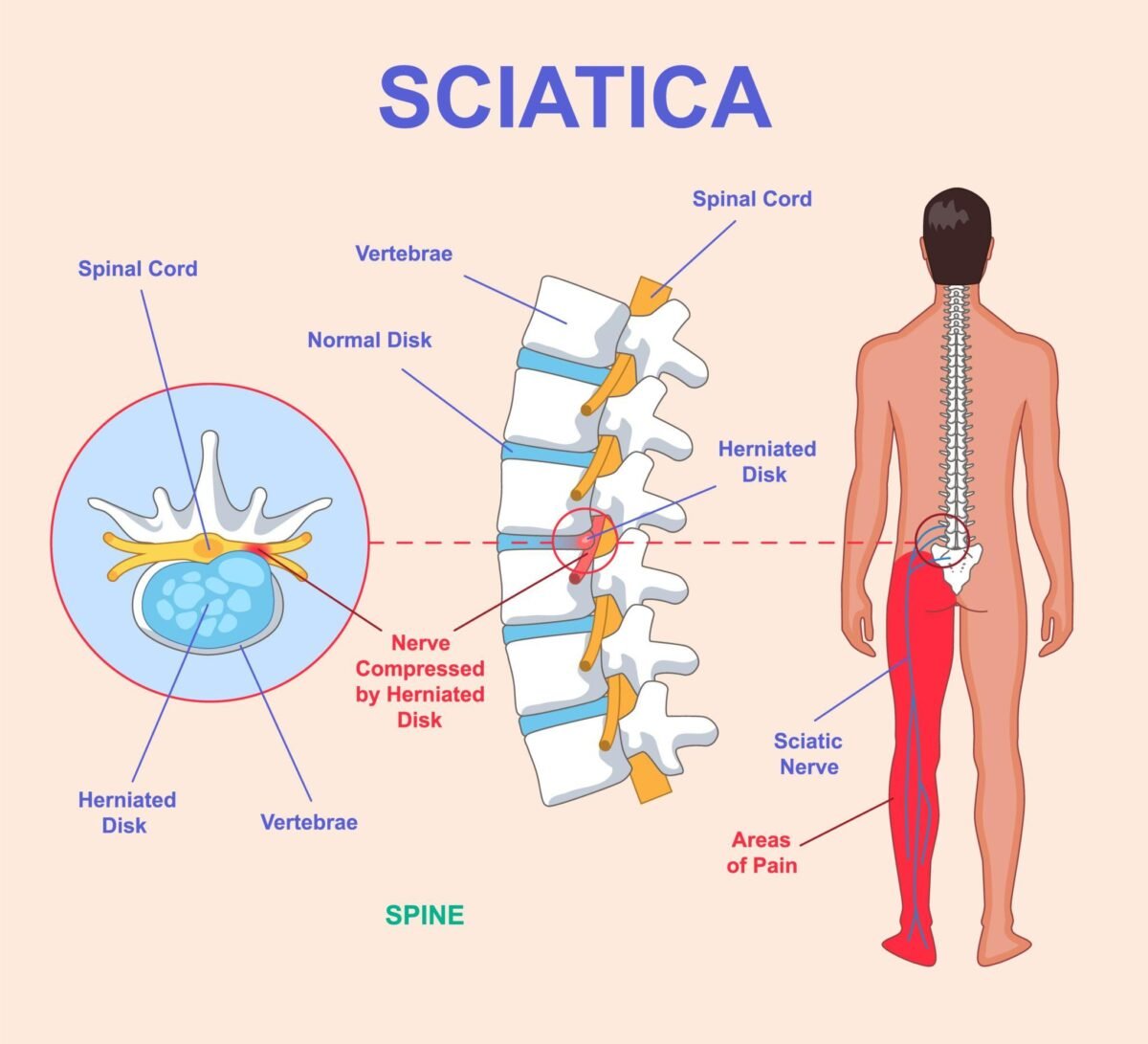
Slip Disc vs Sciatica: Symptoms, Causes, Differences & Physiotherapy Treatment
My MRI says I have a slip disc. So why is the doctor calling it sciatica?
We get some version of this question more often than you’d think.
A lot of people use slip disc and sciatica as if they’re just two names for the same thing, which is why understanding the difference between the two matters.
A slipped disc is a problem with one of the actual discs sitting between the bones of your spine. Sciatica, on the other hand, describes a pattern of symptoms – pain, tingling, that sort of thing – caused by irritation or pressure on nerves that feed into the sciatic nerve.
The two are connected fairly often. A slipped disc is genuinely one of the more common reasons someone ends up with sciatica. But having a slipped disc doesn’t guarantee you’ll get sciatica out of it and having sciatica doesn’t automatically mean a slipped disc is the cause.
This is exactly where things get a bit more interesting than most people expect – and where an MRI report on its own doesn’t tell you the whole story.
So What’s Actually the Difference?
Here’s probably the simplest way to hold the two ideas apart in your head.
A slipped disc describes something happening to a structure – the disc itself. Sciatica describes what happens to you when a nerve gets irritated or compressed.
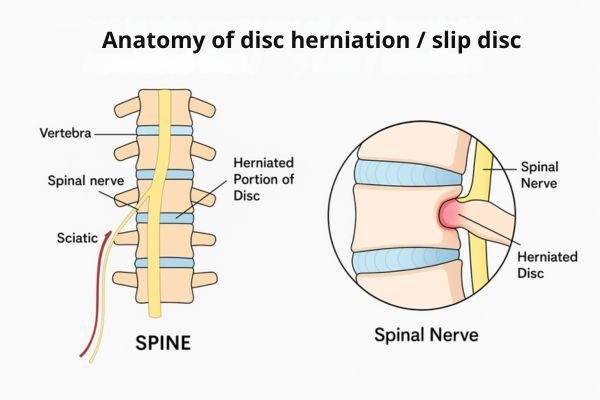
A slipped disc, sometimes called a herniated or prolapsed disc, happens when the softer material inside a spinal disc pushes out through a weak spot in its tougher outer layer. Plenty of slipped discs cause no symptoms whatsoever. Others bring on back pain, numbness, tingling, or weakness – depending entirely on whether a nearby nerve gets caught up in it.
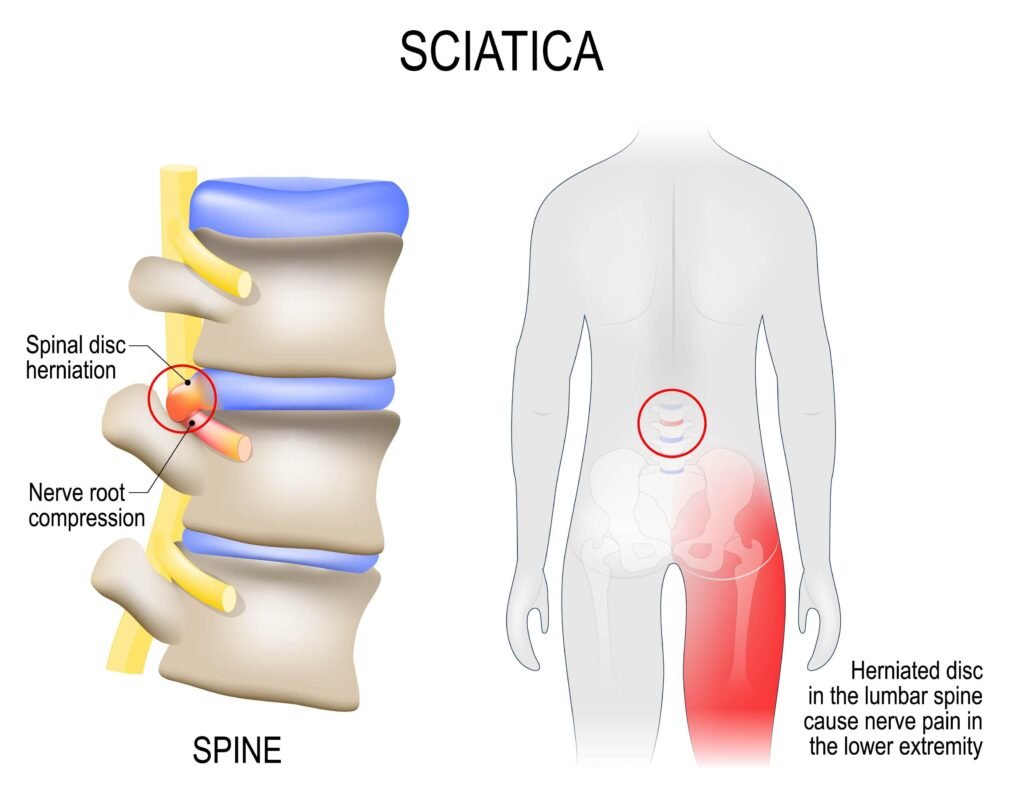
Sciatica is a different animal. It’s about symptoms that follow the path of the sciatic nerve – usually the lower back, buttock and one leg. The pain can be sharp, burning, or feel like a jolt of electricity and tingling, numbness, or weakness often ride along with it.
So if you’re wondering whether a slip disc and sciatica are the same thing – no, they’re not.
But one can absolutely lead to the other.
Can a Slipped Disc Actually Cause Sciatica?
Yes, it can.
When a disc in the lower spine pushes against or irritates a nerve root, the symptoms that follow can travel down into the buttock and leg. Once those symptoms trace the path of the sciatic nerve, that’s what gets labelled sciatica.
Here’s the part people often get wrong, though.
What shows up on an MRI and what you actually feel don’t always line up neatly. Some people have a visible disc bulge and barely notice anything. Others have real, significant leg pain because a nerve is being irritated, even if the scan itself doesn’t look particularly dramatic.
Which is exactly why a proper physiotherapy assessment isn’t just where does it hurt? It’s about connecting your actual symptoms with how you move, your strength, your sensation and what you’re currently struggling to do.
What Does a Slipped Disc Actually Feel Like?
Honestly, there’s no single slipped disc feeling you can point to.
Depending on which disc is affected and whether a nerve is caught up in it, someone might notice:
- Lower back pain
- Pain reaching into the buttock or leg
- Tingling or pins and needles
- Numbness
- Muscle weakness
- Difficulty bending or straightening the back
- Pain that shifts depending on the movement or position
And some people with a genuine disc herniation feel nothing at all – no pain, no tingling, nothing.
Which is one good reason not to panic the moment an MRI report uses words like disc bulge or disc protrusion. The scan is one piece of the puzzle, not the whole picture. Your actual symptoms and a proper physical exam matter just as much, arguably more.
What Does Sciatica Actually Feel Like?
Sciatica tends to be easier to recognise by where the symptoms go rather than how intense they are.
You’ll usually notice pain starting around the lower back or buttock and travelling down the back of the thigh, sometimes reaching the lower leg or foot. It can feel sharp, burning, shooting, or like a jolt.
Tingling, numbness and weakness often come along for the ride. A lot of people also notice things get worse with certain movements, or with a cough or a sneeze.
One helpful rule of thumb: pain that stays entirely in your lower back usually isn’t what clinicians mean by sciatica. Sciatica is really a nerve-related leg symptom, first and foremost.
If you want to understand sciatica itself in more detail, you can also read our guide on physiotherapy for sciatica and managing radiating pain.
What Actually Causes Sciatica?
A slipped disc is a common cause, but it’s far from the only one.
Sciatic nerve symptoms can also come from spinal stenosis, spondylolisthesis and a handful of other back conditions or injuries.
That matters more than it might seem, because treating every case of leg pain as though it’s the same problem doesn’t really hold up. The same goes for exercise – something that feels perfectly fine for one person can genuinely aggravate someone else’s symptoms, even if both were told they have sciatica.
So the useful question was never really which exercise is best for a slip disc. It’s more like: what is my back and leg actually responding to right now and what can I safely build back up from there?
Can Physiotherapy Help With a Slipped Disc?
In many cases, yes – physiotherapy can genuinely be part of a conservative, non-surgical approach.
That doesn’t mean a physiotherapist is somehow pushing a disc back into place. That’s not actually how any of this works, no matter what you’ve read online.
The real focus tends to be on understanding your symptoms, helping you stay appropriately active rather than completely still, improving movement and strength and gradually getting you back to whatever you’ve been avoiding – sitting through a full workday, walking the dog, picking things up without bracing first.
Depending on the person, treatment might include exercise therapy, advice on movement, temporarily modifying certain activities and hands-on techniques where they’re genuinely useful.
At Fit O Fine Physiotherapy Clinic, disc bulges and sciatica both fall under our orthopedic physiotherapy services. The actual programme should be shaped by what you’re experiencing day to day, not simply by the wording sitting on an MRI report.
What About Slip Disc Exercises?
This is honestly where the internet can do more harm than good.
Search slip disc exercises and you’ll find everything from fairly aggressive stretching routines to claims that one particular move can cure a disc problem outright. Real rehabilitation looks a lot less dramatic than that, most of the time.
What exercises actually make sense depends on your symptoms, how irritable things currently are, your movement pattern, your strength and where you’re at in recovery. Gentle activity is generally favoured over long stretches of bed rest – but that doesn’t mean you should keep doing something just because a video online called it a slip disc exercise.
For some people, walking and gradually increasing activity is genuinely enough to get moving in the right direction. Others need something more structured – work on mobility, trunk and hip strength, movement control, or a staged return to a specific sport or activity.
And if something consistently makes your symptoms noticeably worse, that’s worth paying real attention to. More isn’t automatically better here.
Does a Slipped Disc Always Need Surgery?
No, not usually.
Surgery isn’t the typical path for a slipped disc. A good number of cases improve with conservative treatment and, honestly, time. Surgery tends to get considered when symptoms simply aren’t improving with other treatment, or when there’s worsening neurological weakness or numbness that needs direct attention.
That’s not to say surgery is never the right call – it sometimes is. Severe or progressive neurological symptoms genuinely need proper medical assessment and certain emergency symptoms need immediate attention rather than a few weeks of physiotherapy first.
The sensible order of operations is to work out what’s actually happening and then decide on treatment from there – not the other way around.
When Should You See a Physiotherapist?
You don’t need to wait until the pain becomes unbearable before getting it looked at.
An assessment tends to be worthwhile when back or leg pain is:
- Getting in the way of walking or normal daily activities
- Making sitting, standing, or bending genuinely difficult
- Stopping you from exercising or working the way you normally would
- Sticking around despite reasonable self-care
- Recurring, along with stiffness or movement limitations
- Coming with tingling, numbness, or weakness
A physiotherapist can look at how you move, talk through your symptoms and work out whether physiotherapy makes sense on its own or whether you need a medical opinion first. For more persistent or concerning symptoms, medical assessment alongside rehabilitation is often the right combination.
When Is a Slip Disc or Sciatica an Actual Emergency?
This is the section I’d genuinely ask you not to skip past.
Most back pain, slipped discs and sciatica cases aren’t emergencies. But a handful of neurological symptoms absolutely are and they need urgent attention.
Seek emergency medical help if you develop:
- Numbness around your genitals or backside
- Trouble starting to urinate, or being unable to urinate at all
- Loss of control over your bladder or bowel
- Severe or worsening weakness or numbness affecting both legs
- Serious neurological symptoms following a significant accident
These can point to serious nerve compression, including cauda equina syndrome and they need urgent hospital assessment – not a stretch, not a wait-and-see approach and not your next scheduled physiotherapy appointment.
Slip Disc Treatment in Bardhaman
If you’re looking into slip disc treatment in Bardhaman, the first question shouldn’t be which piece of equipment a clinic has on the wall.
Ask whether your problem will actually be assessed properly.
At Fit O Fine, spinal conditions – disc bulges, sciatica, lumbar spondylosis and spinal stenosis – sit within our orthopedic treatment services.
The clinic is led by Dr. Satyen Bhattacharyya, Founder & Chief Physiotherapist, who brings more than 18 years of clinical and academic experience to the work. Our approach stays expert-led, personalised and built around one-on-one care rather than a generic template.
The aim was never to treat what an MRI report says. It’s to understand the actual person carrying those symptoms.
The Bottom Line
If you’ve been told you have a slip disc and you’re also dealing with pain running down your leg, it’s genuinely easy for the two terms to blur together in your head.
But it’s worth holding onto the distinction: a slipped disc is a structural issue involving a spinal disc. Sciatica is a pattern of nerve-related symptoms. A slipped disc can cause sciatica, sure – but they’re not the same diagnosis and they don’t always travel together.
That distinction actually matters, because treatment shouldn’t be built off a scan alone. Your symptoms, what shows up on examination, how you move, your strength and what you’re currently struggling with day to day all shape what happens next.
If back or leg pain has started dictating how you sit, walk, work, or exercise, getting it properly assessed is usually a far better use of your evening than searching for the one perfect exercise online.
Frequently Asked Questions
Q1: Is a slip disc the same as sciatica?
Answer: No. A slipped disc is a problem involving a spinal disc, while sciatica describes symptoms caused by irritation or compression of nerves that feed into the sciatic nerve. A slipped disc can be one cause of sciatica, but they’re different things.
Q2: Can a slip disc cause sciatica?
Answer: Yes. A disc in the lower back can irritate or press on a nerve root, producing pain, tingling, numbness, or weakness that travels into the buttock or leg.
Q3: Can you have a slip disc without sciatica?
Answer: Yes. Not every slipped disc causes symptoms at all and it’s entirely possible to have a disc problem without any of the nerve-related symptoms associated with sciatica.
Q4: Can sciatica happen without a slip disc?
Answer: Yes. Sciatica can come from several other sources too, including spinal stenosis, spondylolisthesis and other causes of nerve irritation.
Q5: Can physiotherapy actually help with a slip disc?
Answer: For many people, yes. Physiotherapy can be a genuine part of conservative management, often involving exercise, movement advice, activity modification and other techniques suited to your specific presentation.
Q6: Does every slip disc need surgery?
Answer: No. Surgery isn’t usually needed. That said, medical review and specialist treatment may become relevant if symptoms aren’t improving, or if neurological weakness or numbness is getting worse.
Q7: Should I exercise if I have a slip disc?
Answer: In most cases, staying appropriately active and gradually returning to movement works out better than long periods of bed rest. That said, the right exercises depend on your specific symptoms and shouldn’t be picked purely from a generic routine you found online.
Q8: When should I seek urgent help for sciatica?
Answer: Get urgent medical help if you notice numbness around the genitals or backside, difficulty urinating, loss of bladder or bowel control, or severe or worsening weakness or numbness affecting both legs.