
 +91 6295115701
 fitofine.in@gmail.com
 27A, Town Hall Para, Bardhaman, West Bengal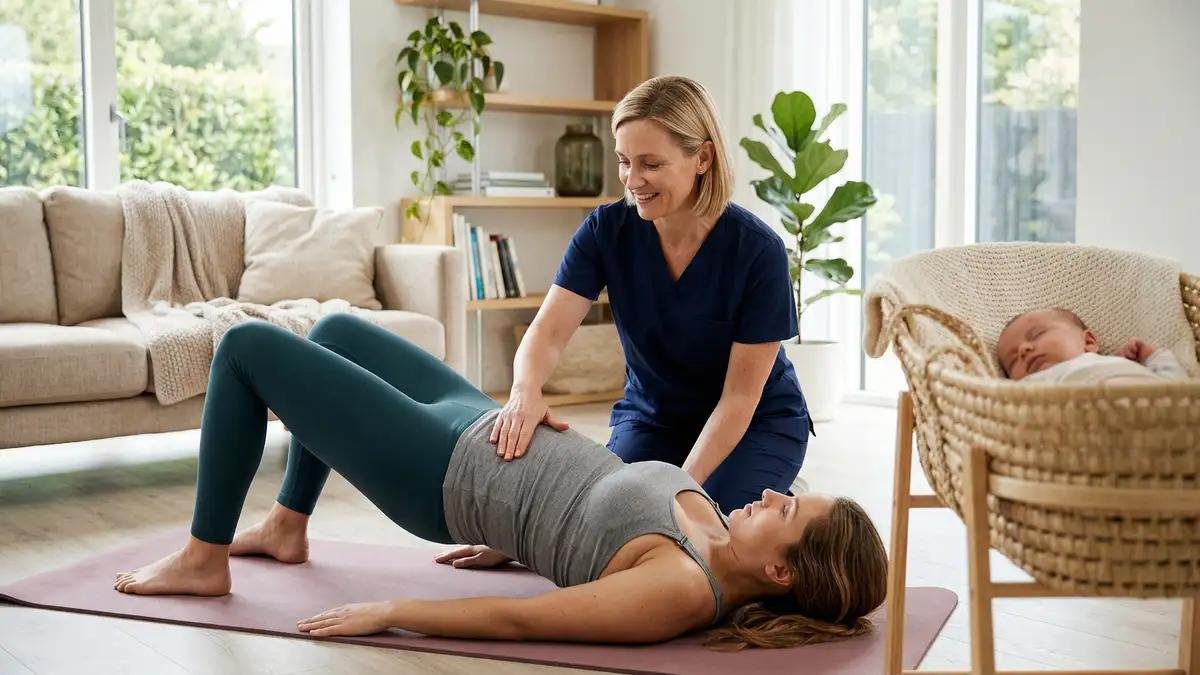
Why Every New Mother Deserves Postpartum Physiotherapy After Childbirth
Here’s something that doesn’t get said often enough.
The weeks and months after having a baby are medically significant. Not just emotionally, not just logistically with the feeds and the sleep schedules and the sheer relentlessness of a newborn. Physically, structurally, your body is in a state that genuinely needs care. And in most cases, that care gets missed from the new mother’s life.
Pregnancy leaves women with a lot of physical and emotional scars, like the back pain that started during pregnancy and never fully left. The core that feels disconnected in a way that’s hard to describe. The leaking. The heaviness. The sensation that something is just not quite right down there even weeks after the birth.
These are not things to push through. They’re things that postpartum physiotherapy is specifically designed to address, and addressing them early makes a difference that shows up years later, not just in the next few weeks.
What Nobody Tells You About What Birth Does to the Body
People prepare for birth. Very few prepare or even think about what happens to the body after it.
During pregnancy, a hormone called relaxin gradually loosens the ligaments in the pelvis and lower spine to allow for the baby’s growth and eventual arrival. The abdominal muscles, which are built to work as a connected unit, stretch apart to accommodate a growing uterus. This separation, called diastasis recti, happens in most pregnant women to some degree. The pelvic floor, which is essentially a hammock of muscles supporting everything above it, spends nine months under steadily increasing load.
And then birth happens on top of all of that.
A vaginal delivery puts the pelvic floor through significant stretch and sometimes tearing.
A C-section, which often gets described as the easier option, is actually major abdominal surgery cutting through seven layers of tissue. Recovering from that while doing night feeds and lifting a baby and trying to function like a normal human being is genuinely not a small thing.
What happens after this, most of the time, is a new mother comes home and is expected to manage. Rest when the baby rests. Take it easy. You’ll be fine in a few weeks.
What Postpartum Physiotherapy Actually Does in Practice
This is where things get specific, and specific matters because vague doesn’t help anyone.
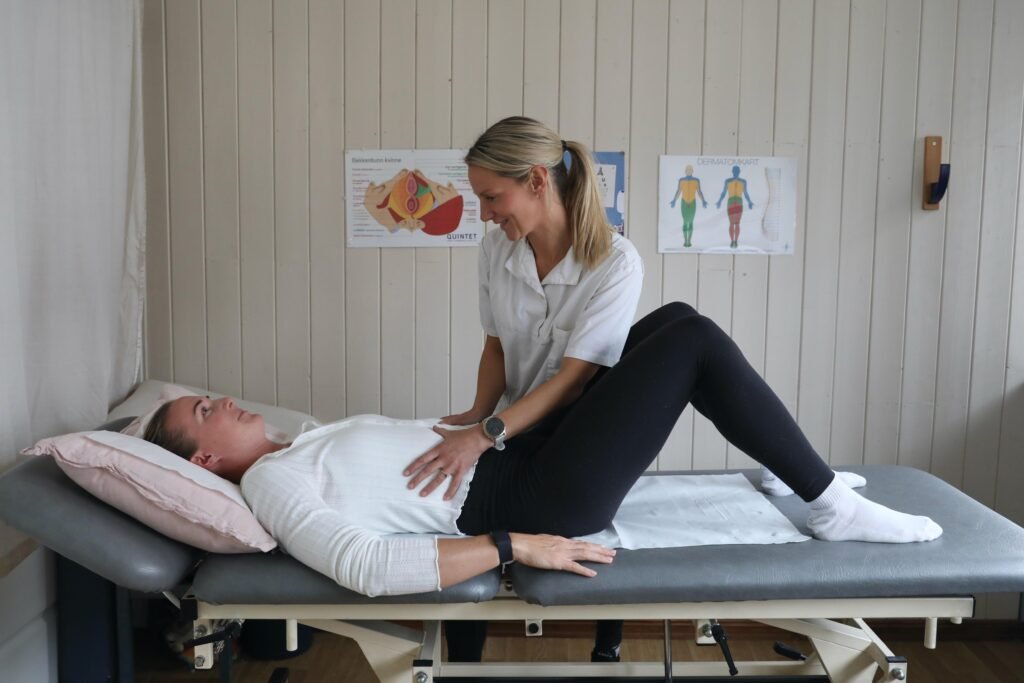
Postpartum physiotherapy starts with an assessment.
Not a quick check-in. A proper clinical picture of how the pelvic floor is actually functioning, where the abdominal separation stands, what posture has been doing, and how the lower back and pelvis are coping. The treatment that follows comes from that picture, not from a standard protocol.
What that includes depends on the individual. For most women it involves pelvic floor rehabilitation, rebuilding coordination and strength in muscles that have been through a significant physical event.
It also includes postural work. Hours of feeding in a forward-hunched position every single day rounds the shoulders, tightens the upper back, and gives the neck something new to complain about. That doesn’t sort itself out while the feeding continues.
For C-section recovery, scar tissue management is a part of care that is almost never mentioned and almost always needed.
The Right Time to Start Is Probably Earlier Than You Think
The six-week check has become a kind of unofficial green light for postpartum recovery. Get through six weeks, go to the appointment, get cleared, and then get on with things.
The six-week check is important. It is also not a physiotherapy assessment. It doesn’t look at how the pelvic floor is functioning, whether there’s meaningful abdominal separation, or how the scar is healing internally. It checks that you are medically well. That’s a different thing.
Physiotherapy assessment and gentle work can actually begin before six weeks for most women. Not loaded exercise, not anything strenuous, but gentle breathing reconnection, soft tissue work, and an honest look at where things actually are. Starting early means that when active rehabilitation begins, it comes from an accurate picture rather than assumptions.
Pregnancy Physiotherapy Near Me: Finding the Right Ongoing Support
When people search for pregnancy physiotherapy near me or postpartum care locally, they’re often just trying to find something convenient . Which is completely understandable when you’re coordinating feeds and nap schedules around an appointment.
But what matters beyond location is continuity and clinical experience.
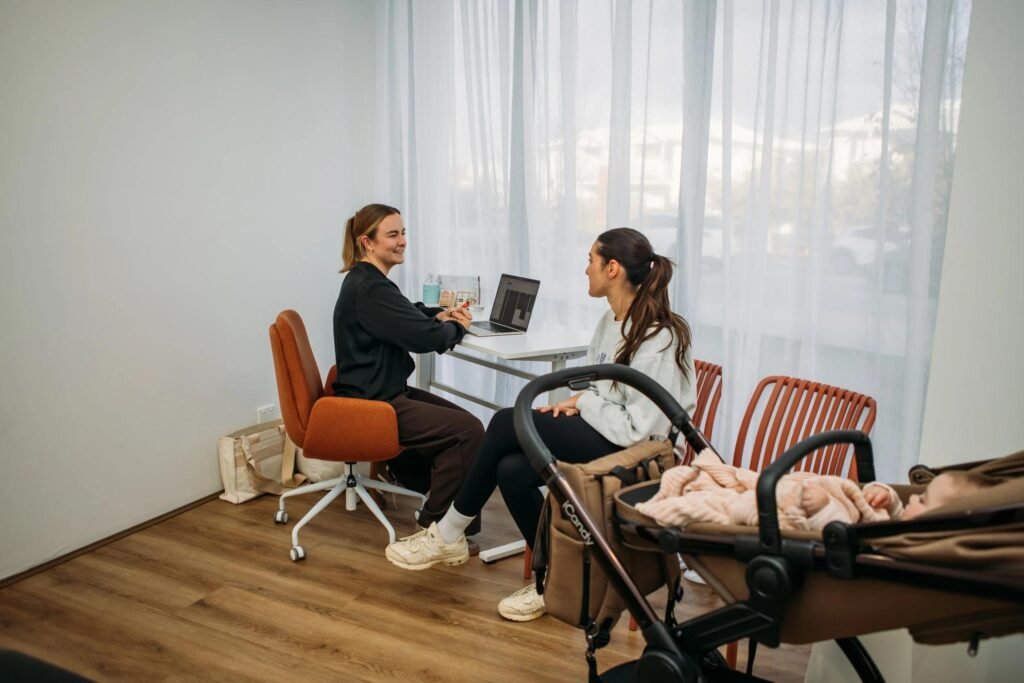
Postpartum rehabilitation isn’t linear or quick. The body changes week to week during this period and the program needs to cater to this changes. A physiotherapist who knows your delivery, your specific presentation, and what your body has been doing since you first walked in is going to provide genuinely different care to one who sees you occasionally without that context.
At Fit O Fine, Prof. Satyen Bhattacharyya and the team bring 18 years of clinical experience, including a real understanding of what new mothers are navigating. We’ve worked with women at six weeks postpartum and women a year out still dealing with things that were never addressed. The starting point doesn’t matter as much as people think. What matters is that you start.
Your Recovery Deserves to Be Taken Seriously
Carrying and growing a baby is one of the most significant things a human body ever does. The physical cost of that, and of birth, is real. The recovery from it deserves the same quality of attention that any other significant physical event would receive.
Postpartum physiotherapy is not about bouncing back. It’s about building forward. A core that works. A pelvic floor that functions. A body that isn’t quietly compensating for things that were never properly treated.
If you’re a new mother in or around Bardhaman, weeks out or months out, and things still don’t feel quite right, that feeling is worth following up on.
FAQs
Q1. When can I start postpartum physiotherapy?
Gentle assessment can begin within weeks of birth, active rehab from six weeks with clearance.
Q2. Is postpartum physiotherapy only for vaginal births?
No. C-section recovery has its own specific needs that physiotherapy addresses directly.
Q3. I’m leaking when I sneeze. Is that normal after birth?
Common but not normal. It’s treatable pelvic floor dysfunction, not something to just accept.
Q4. Can physiotherapy help with diastasis recti?
Yes. Targeted core rehabilitation addresses abdominal separation safely and effectively.
Q5. How do I book at Fit O Fine?
Visit fitofine.com or call +91 6295115701 to book.