
 +91 6295115701
 fitofine.in@gmail.com
 27A, Town Hall Para, Bardhaman, West Bengal
Pneumothorax Breathing Exercises: Safe Recovery After a Collapsed Lung
Pneumothorax Breathing Exercises: Safe Recovery After a Collapsed Lung
A pneumothorax has a way of turning an ordinary day into a scary one. One minute you feel fine. The next, you’re dealing with sudden chest pain, or breathlessness that seems to come from nowhere. And even after you’ve been treated and things are technically okay, it’s completely normal to feel a bit nervous about taking a deep breath, walking further than usual, or getting back into exercise.
If you’ve landed here searching for “pneumothorax breathing exercises,” there’s one thing worth clearing up first. Breathing exercises don’t treat an active pneumothorax. A collapsed lung is, first and foremost, a medical problem and depending on how big it is and what caused it, you might need observation, oxygen, drainage of the trapped air, a chest drain, or occasionally surgery.
Breathing exercises and physiotherapy can absolutely play a role in your recovery. But that role starts after proper medical treatment, once your doctor has actually said it’s safe for you to begin rehab. Not before.
So this guide is about that stage. What breathing work might help once you’re cleared, how to ease back into activity without overdoing it, what to leave alone for now and which symptoms you should never try to just push through.
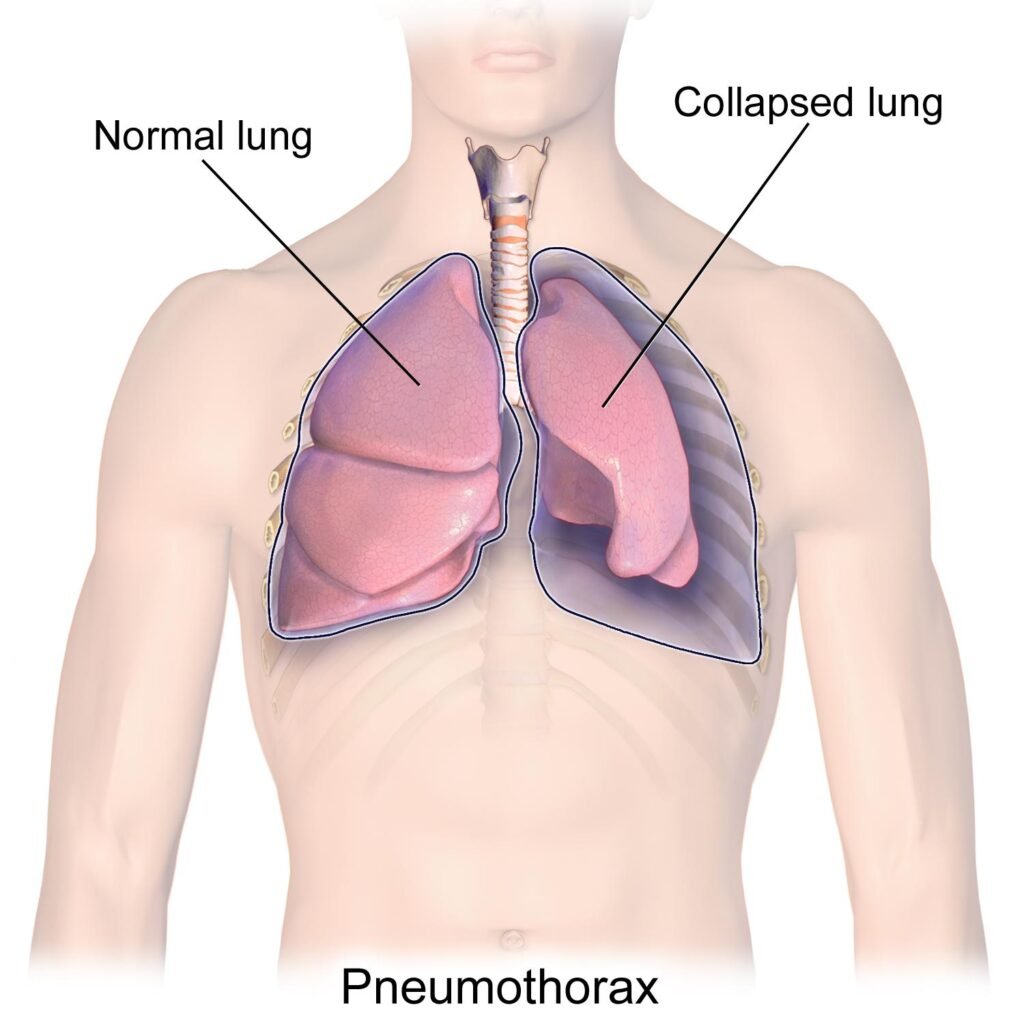
What actually is a pneumothorax?
Put simply, a pneumothorax (people usually call it a collapsed lung) happens when air gets into the space between your lung and your chest wall. That trapped air presses on the lung and stops it expanding the way it’s supposed to.
How serious it is depends a lot on the case. Sometimes a small pneumothorax just gets watched while your body slowly reabsorbs the air by itself. A bigger one, or one causing more obvious symptoms, usually needs active treatment to get the air out and let the lung re-expand.
Common symptoms include:
- Sudden chest pain
- Shortness of breath
- Tightness across the chest
- Fast, shallow breathing
- A racing heart
- Feeling unusually tired
One thing worth remembering: if you’ve had a pneumothorax before and suddenly get new chest pain or your breathing takes a turn for the worse, don’t try to breathe your way through it. Get checked and don’t wait.
Do breathing exercises actually help after a pneumothorax?
For some people, yes. But when you start them matters more than what you do.
After a pneumothorax, a lot of people end up breathing more shallowly than they realize. Sometimes that’s pain. Sometimes it’s anxiety. Sometimes it’s just that you’ve been less active lately, or you’re unconsciously holding back from taking a full breath because part of you doesn’t trust it yet. Once your lung has actually been treated and your medical team gives the green light for rehab, a physiotherapist can help you work back toward breathing comfortably, moving more freely and building your activity up bit by bit.
None of this is about forcing your lungs to work harder, or somehow “training” them to heal faster. It’s really just about getting you comfortable with breathing and moving again, without the constant background tension of wondering if something’s wrong.
Some hospital physiotherapy protocols do build breathing exercises into recovery from chest conditions or chest procedures. But which exercises and when to actually start, comes down to your own situation, not a generic checklist.
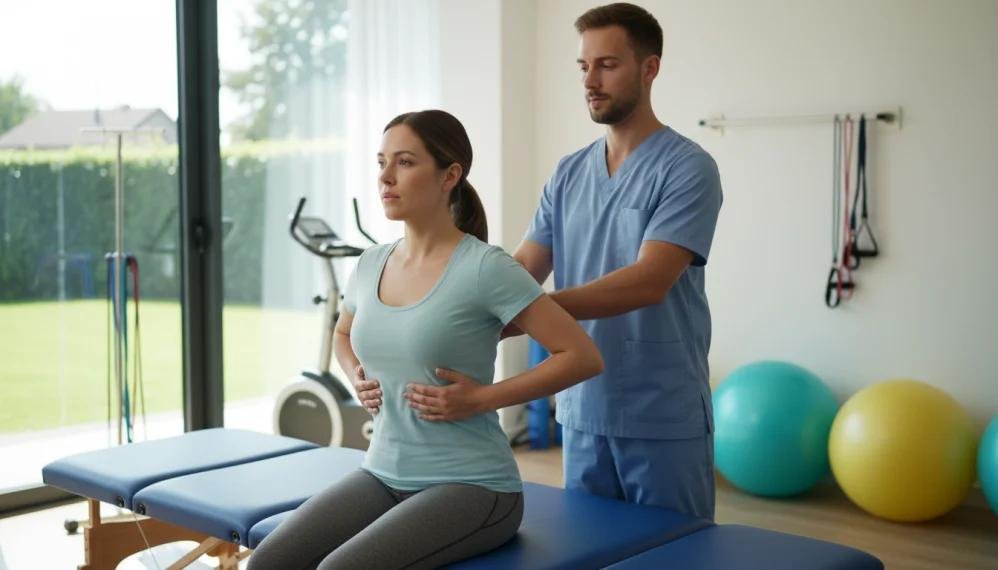
Breathing exercises during recovery
There isn’t one breathing exercise that suits everyone recovering from this. Your medical team needs to confirm your lung has recovered enough before you start anything at all that part isn’t optional.
Once you’ve been cleared, though, a physiotherapist might walk you through a few simple things.
Relaxed breathing. Get into a comfortable sitting position and let your shoulders drop, rather than holding them up near your ears (most people do this without noticing). Breathe gently through your nose no need to pull in some huge, dramatic breath. Just let your belly and lower ribs move naturally, then breathe out slowly, without forcing it. The whole idea is to make breathing feel easier, not to work harder at it. If you’ve picked up a habit of taking short, tense breaths out of fear or discomfort, this tends to help more than people expect.
Gentle deep breathing. Once you’ve been told it’s appropriate, you might be shown how to slowly deepen your breath. In slowly, letting your ribs expand outward, pausing only if you’ve specifically been told to, then breathing out comfortably. Gentle is the operative word here you’re not trying to repeatedly hit your maximum lung capacity and holding your breath for long periods won’t speed anything up. If anything, it works against you.
Breathing while walking. Breathing and movement really do go together. Once walking’s been approved, start at a pace that feels okay and try to keep your breathing relaxed instead of holding it when you get tired. If you notice you’re getting unusually breathless, slow down and let yourself recover before continuing. Gentle walking is often encouraged fairly early on, though strenuous activity and heavy lifting are usually held off for a while how long depends on your case.
A word of caution about “breathing exercises for collapsed lung”
You’ll probably come across some fairly aggressive advice online resistance-breathing devices, positive-pressure techniques, that sort of thing, marketed for a collapsed lung.
Please don’t start any of that on your own.
During an active pneumothorax, some positive-pressure techniques can actually be harmful. NHS clinical guidance is pretty clear on this: hold off on positive-pressure breathing techniques while the pneumothorax is active and only pick them back up once it’s fully resolved.
Which is part of why that search phrase “breathing exercises for collapsed lung” can send people in the wrong direction. If your lung is currently collapsed, the priority is medical treatment. Full stop. Not something you found on a wellness blog.
Once it’s actually been treated and confirmed resolved, breathing exercises become genuinely useful, as part of a rehab plan built around you specifically.
Getting back to activity: how much is enough?
Honestly, this is one of the trickiest parts. Too little and you feel like you’re stuck. Too much, too soon and you risk setbacks or just scaring yourself.
After a pneumothorax, feeling tired and a bit less fit than before is normal. It doesn’t necessarily mean anything’s gone wrong. Your activity dropped off during treatment and early recovery and your body just needs time to build back.
A sensible starting point is usually the simplest one.
Start with walking. Short, comfortable walks make sense once you’ve been medically cleared. No need to walk fast. Focus on keeping your breathing relaxed and let the duration grow gradually as you feel able.
Progress slowly. If a 10-minute walk feels manageable, build on it over time rather than all at once. There’s no prize for jumping straight back to your old workout routine. Usually it just backfires.
Hold off on heavy straining early. Heavy lifting, intense workouts, contact sports these usually need to wait for a while. How long is really a question for your doctor, since it varies person to person. Some NHS guidance points to at least four weeks of avoiding strenuous exercise and heavy lifting, though other sources give different timeframes depending on the situation.
What rehab looks like beyond breathing exercises
Once you’re cleared, rehab often covers more ground than just breathing work. Depending on your symptoms and general condition, physiotherapy might involve:
- Walking and aerobic conditioning, to rebuild your cardiovascular fitness so everyday life stops feeling like an uphill battle
- Gentle shoulder movement, especially if you spent time in hospital or had a chest drain, since your upper body can get surprisingly stiff from that
- Chest and thoracic mobility work, since your physiotherapist may want to check how your ribs and upper back move while you breathe
- Posture and movement training, which won’t “cure” a pneumothorax, but comfortable positioning genuinely makes breathing and moving easier during recovery
- Functional exercise, working back toward the actual things you do day to day: walking to work, stairs, chores, exercise, life in general
What should you steer clear of after a pneumothorax?
Until you’ve actually been cleared, don’t assume you can just pick up where you left off. Depending on where you’re at, this might mean temporarily avoiding:
- Heavy weightlifting
- High-intensity workouts
- Contact sports
- Anything involving extreme exertion
- Scuba or deep-sea diving
- Any activity that brings on chest pain or noticeable breathlessness
Diving is worth flagging separately. A history of pneumothorax can make diving genuinely risky, because pressure changes underwater can have serious consequences. This isn’t a decision to make on your own. It’s a conversation to have with a respiratory specialist before you even think about getting back in the water.
How physiotherapy actually helps
Recovery isn’t only about the lung looking normal again on a scan. It’s also about you trusting your own body enough to move it and rebuilding whatever physical capacity you lost along the way.
A physiotherapist typically looks at your breathing pattern, exercise tolerance, chest and upper-body movement, posture, muscle strength, general mobility and how breathless you get with activity and from there, builds rehab around what they actually find, rather than handing you a generic printout.
If you’ve been fairly inactive for weeks, the first realistic goal might just be walking comfortably. If you were quite active beforehand, the plan might eventually shift toward rebuilding endurance and getting you back to your usual routine. Either way, it should be shaped around your situation, not a template.
When should you actually stop and get help?
Your body usually gives you some warning when something’s too much. But a handful of symptoms deserve more than just backing off. Stop what you’re doing and get medical advice if you notice:
- New chest pain
- Sudden or worsening shortness of breath
- Real difficulty breathing
- Dizziness or fainting
- Anything that feels like your original pneumothorax episode all over again
A recurrence can feel a lot like the first time round and worsening breathlessness after you’ve been discharged needs to be checked urgently, not managed with more breathing exercises at home.
How long does recovery actually take?
There’s no single answer that fits everyone here, no matter how much people want a clean timeline.
A small pneumothorax might clear up within days to a few weeks. A larger one, or one that needed a chest drain or surgery, can take a fair bit longer. Follow-up imaging is often used to confirm your lung has genuinely recovered before you’re given the go-ahead to progress further.
How fast you get back to exercise depends on the size and type of pneumothorax, how it was treated, whether surgery was involved, your underlying lung health, whether you’ve had one before and how your own symptoms and tolerance are actually holding up.
Instead of asking “when does everyone get back to normal,” it’s more useful to ask “when is it safe for me.” Your treating doctor or physiotherapist is really the only one who can answer that, based on how you’re actually recovering.
Can it happen again?
Unfortunately, yes. Having one pneumothorax does raise your risk of having another. Smoking is also linked to a higher chance of it coming back, so if that applies to you, quitting is a genuinely important step in protecting your lungs going forward.
It’s also one more reason not to rush back into intense exercise, or wave off new symptoms as “probably nothing.”
Final thoughts
Going through a pneumothorax has a way of making you second-guess your own breathing for a good while afterward. That’s a completely understandable reaction. Once you’ve been through something as unnerving as a collapsed lung, even ordinary breathlessness on a walk can make you wonder if it’s happening again.
The answer isn’t to push harder or force things along.
Follow the advice your medical team has actually given you, make sure the pneumothorax has been properly treated and confirmed resolved and then build your activity back up gradually from there. Breathing exercises can genuinely help at this stage, but only once they’ve been recommended for your specific situation, not because some article told you to try them.
At the end of the day, rehab has one simple goal: helping you breathe, move and get back to being active with real confidence, without rushing something that just needs a bit of time to settle.
Frequently Asked Questions
Q1: Can breathing exercises cure a collapsed lung on their own?
Answer: No. Breathing exercises cannot replace medical treatment for an active pneumothorax. A collapsed lung needs proper medical assessment and treatment first.
Q2: When can I start breathing exercises after a pneumothorax?
Answer: You should start only after your treating healthcare professional says it is appropriate. The timing depends on the severity of the pneumothorax and the treatment you received.
Q3: Is walking safe after a pneumothorax?
Answer: Usually, walking can be resumed once the pneumothorax has resolved and you have been cleared for activity. Start slowly and gradually increase your activity level.
Q4: Can I go back to the gym after a collapsed lung?
Answer: Most people can eventually return to the gym, but the timing and intensity should be discussed with your doctor. Heavy lifting and intense exercise may need to be avoided during the early stages of recovery.
Q5: Should I take really deep breaths to help my lung heal faster?
Answer: No. Forcing deep breaths does not necessarily speed up healing. If deeper breathing exercises are appropriate for you, your physiotherapist can guide you on how to perform them safely and comfortably.
Q6: Can physiotherapy help after a pneumothorax?
Answer: Yes. After proper medical treatment and clearance, physiotherapy can help improve breathing control, mobility, exercise tolerance, and your gradual return to normal activities.
Q7: Can I go scuba diving again after a pneumothorax?
Answer: You should not assume that scuba diving is automatically safe after a pneumothorax. Pressure changes during diving can carry risks. Consult a respiratory specialist before returning to scuba diving.
Get individualized physiotherapy guidance at Fit O Fine
At Fit O Fine Physiotherapy, we work on the idea that rehab should be built around the person in front of us, not handed out as a one-size-fits-all sheet.
If your doctor has cleared you for physiotherapy after a pneumothorax, a proper individual assessment can help map out how to safely work on your breathing, mobility, activity tolerance and your return to everyday movement.
Call Fit O Fine at 62951 15701 to talk through your recovery.