
 +91 6295115701
 fitofine.in@gmail.com
 27A, Town Hall Para, Bardhaman, West Bengal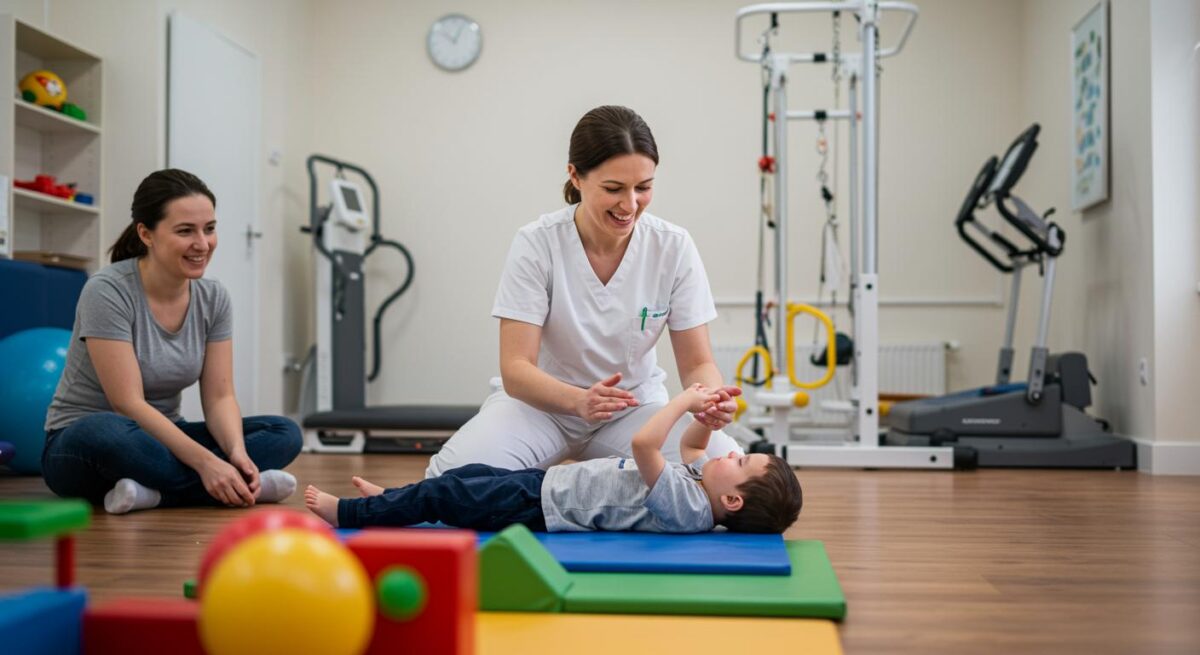
Pediatric Physiotherapy: How Early Intervention Supports Child Development
When an infant is welcomed at a home, they become the center of the lives of the family members. A parent tries with all their might to give their child everything that is needed in giving their child a beautiful healthy life. Some become overly worried at minor inconveniences , yet some worries just get worse with time. Sometimes it starts with a small doubt, maybe your child is already eleven months old and they are not crawling or sitting on their own like the other child their age is doing. You first try to ignore that thought thinking it will be just fine, but the worry becomes stressful after some days.
That feeling is information, this feeling or doubt deserves more than a Google search at midnight. Pediatric Physiotherapy is built for exactly this kind of moment and what it can actually do when it comes in at the right time tends to catch parents off guard in the best possible way.
What Pediatric Physiotherapy Actually Is
In simple terms Pediatric Physiotherapy is about how children move and how they develop the physical skills that everything else in their life will eventually depend on.
Basic movements include:
- Crawling
- Walking
- Running
- Jumping
- Writing
- Catching a ball
- Sitting still on a surface without any support
All of these trace back to foundations that get built in the earliest years of life. A pediatric physiotherapist’s whole job is to make sure those foundations are coming together properly and to step in and help when they’re not.
The children who come through those doors are all kinds:
- Some have a diagnosis such as cerebral palsy, Down syndrome, or developmental coordination disorder
- Some were born weeks or months early and are playing catch-up
- Some have delayed milestones that nobody has managed to put a label on yet, but something clearly isn’t clicking
What they share is a body that needs a bit more support than it’s currently getting.
Why Early Intervention Physiotherapy Changes Everything
Parents who’ve been through this process and come out the other side tend to say the same thing when you ask them what they’d do differently. Every single one of them says they’d have started sooner.
And there’s a genuinely fascinating reason for that. Early Intervention Physiotherapy works so powerfully in young children because of what’s happening inside their brains during those early years, something that will never happen at the same rate again. A young child’s nervous system is making connections at a speed that is almost impossible to fully appreciate. The brain at this age is hungry for input, flexible, genuinely plastic in a way it slowly stops being as childhood progresses. Therapy delivered inside this window doesn’t just teach a child a skill. It helps the nervous system wire itself in a way that holds permanently. The same outcome that might take three months with a two year old could take eight months or more with a seven year old. Not because the seven year old is less capable. Because the window is a different size.
Signs Your Child Might Benefit From an Assessment
There’s a wide range of normal when it comes to child development and most children sit somewhere inside it. A week or two on either side of a milestone usually doesn’t mean anything. But some patterns are worth taking seriously rather than filing under let’s wait and see.
- A baby who isn’t lifting their head comfortably by three to four months.
- Not sitting independently around six to eight months.
- Not pulling up to stand by around twelve months.
These are things worth mentioning to someone who can actually assess rather than just reassure. For older children, the signs can be subtler but just as meaningful.
- Clumsiness that’s noticeably more than other kids the same age.
- A way of walking that just looks a bit unusual.
- Getting tired much faster than peers during physical play.
- Avoiding anything that involves throwing, catching, or coordination without being able to say why.
All of these are worth a proper look.
How Child Development Physiotherapy Actually Works
Most parents walk into a pediatric physiotherapy session expecting something that looks vaguely medical. Exercises, maybe some equipment, a clinical atmosphere. And then they watch their child just play. Which feels confusing for about thirty seconds until you realise that’s completely the point.
Child Development Physiotherapy with young children is play-based because play is the only language young children genuinely speak. You cannot sit a toddler down and explain to them why strengthening their core matters. You can absolutely get them to do ten minutes of activities that achieve exactly that while they think they’re just having a brilliant time on the floor with a fun adult.
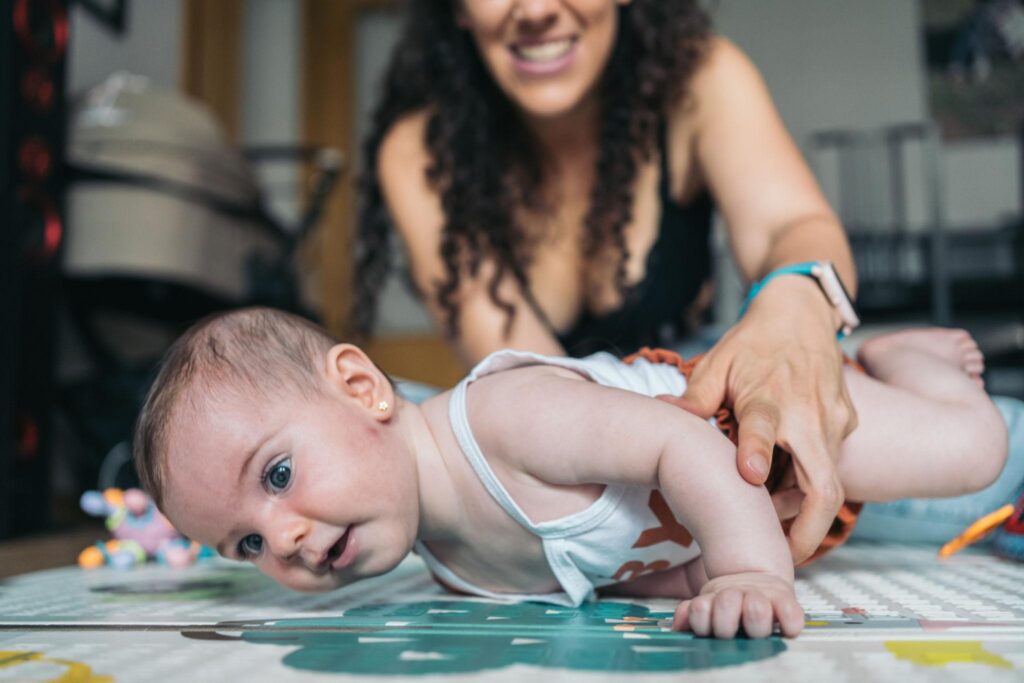
- Tummy time games for a baby building neck and shoulder strength.
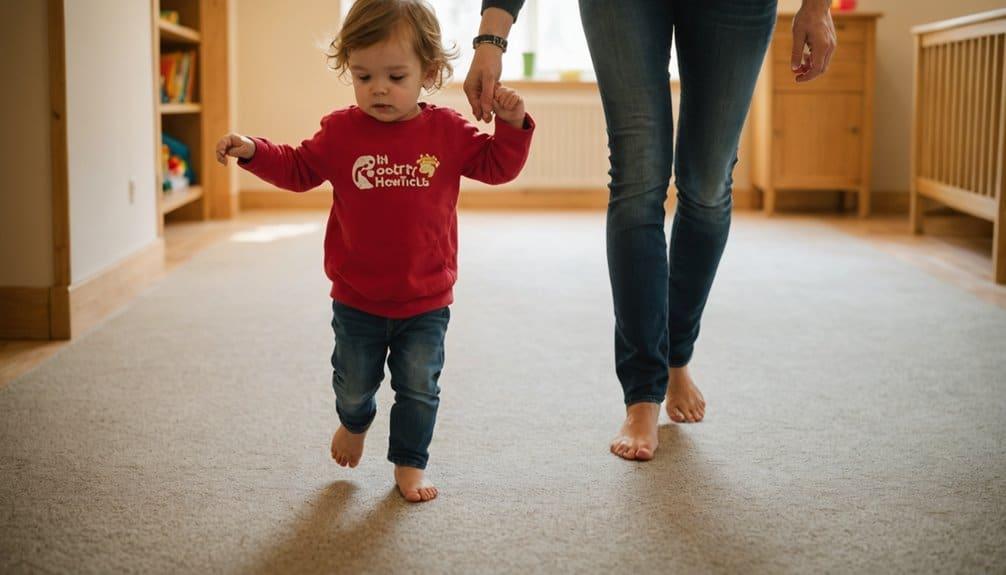
- Balance activities for a toddler that look like an obstacle course.
- Catching and throwing games for an older child working on coordination and reaction time.
A good pediatric physiotherapist is doing precise, clinical work underneath what looks like a play session. The child has no idea. That’s exactly how it should be.
The Role Parents Play in All of This
Nobody tells you this upfront and they probably should. In Early Intervention Physiotherapy, you are not the person sitting in the waiting room. You are part of the treatment itself.
Think about the maths. A session runs for an hour, maybe twice a week if you’re lucky. That leaves a hundred and sixty six hours unaccounted for. Those hours are where the actual progress gets made or doesn’t get made, depending on what’s happening at home. Therapists give parents specific things to do in everyday life, not because they want to turn you into a therapist but because a developing nervous system needs repeated daily input to build new patterns. It cannot get enough of that from a weekly clinic visit alone. The parents who take the home component seriously genuinely see their child move faster through the process. It’s not a theory. It’s just how biology works.
What the First Appointment Actually Looks Like
The first session tends to be the one parents are most nervous about. They arrive not knowing what to expect and usually leave feeling better than they thought they would.
A good first assessment doesn’t start with tests. It starts with watching. The therapist will spend real time just observing the child moving freely, because how a child moves when they’re not thinking about it tells you more than any formal task ever could. From there come the questions, about the pregnancy, the birth, what those early months looked like, what you’ve been noticing at home, what specifically made you decide to come in now.
- Muscle tone
- Strength
- Flexibility
- Balance
- Coordination
- Developmental milestones
all of it gets looked at in a way that’s calibrated to feel manageable rather than overwhelming. You should leave with a clear sense of what’s going on and a specific plan. Not a vague let’s see how it goes. An actual plan.
When to Stop Waiting and Just Go
Here’s an honest thing to say. Most parents who come in for a pediatric physiotherapy assessment wish they’d come in sooner. Not because things were catastrophically wrong. Because they’d spent weeks or months sitting with worry that could’ve been addressed much earlier and the waiting didn’t help either them or their child.
You don’t need a referral. You don’t need a diagnosis. You don’t need permission from anyone. If your child’s movement or development has been worrying you and it’s been worrying you for more than a couple of weeks, that’s enough. Just go. The assessment will either put your mind at rest completely or get things moving in a direction that helps. Both of those outcomes are better than another month of wondering.
Final Thoughts
There is a very specific kind of exhaustion that comes from worrying about your child and not knowing whether your worry is justified. It’s the uncertainty that gets you more than anything else. Is this serious? Am I overreacting? Should I have done something sooner? These questions circle and circle and going to bed doesn’t make them stop.
Early Intervention Physiotherapy doesn’t just help children physically. It gives parents answers. And answers, even when they come with work attached to them, are almost always easier to deal with than not knowing. Child Development Physiotherapy works because children’s bodies are made for change, especially at this age, especially when the right support is in place. Your child doesn’t need to be struggling dramatically for this to be relevant. They just need to be a child whose body would benefit from a little more support than it’s currently getting. If that sounds like your child, the team at Fit O Fine is here to help you figure out what’s going on and what to do about it, without the overwhelm, without the jargon, just genuine care for your child and honest answers for you.
Frequently Asked Questions
From birth. Newborns receive it regularly for things like torticollis and low muscle tone. Age is never the barrier.
Honestly, you don’t and that’s exactly why an assessment exists. Stop guessing and get a real answer.
Most aren’t. Sessions feel like play and a good therapist knows how to make a child feel completely at ease within a few minutes.
Depends on the child. Some need a few months, some need longer. You’ll get a realistic picture after the first session, not a non-answer.
Yes, please do. Especially for young children, having you there makes everything easier and means you know exactly what to continue at home.