
 +91 6295115701
 fitofine.in@gmail.com
 27A, Town Hall Para, Bardhaman, West Bengal
Neuroplasticity Therapy for Anxiety and Burnout: The Science-Backed Reset Your Brain Needs
Let me guess you’re tired. Well not that kind of tiredness that will be permanently solved by a good night’s sleep. It’s almost like a shadow that follows you even on a Sunday morning when nothing is technically wrong.
And if anxiety is layered on top of that exhaustion, then you already know what it means to feel both depleted and on edge at the same time.
Honestly, neuroplasticity therapy is one of the most evidence-grounded approaches available for exactly this kind of situation.
Not because it’s a new discovery. Because it works at the level where the real problem actually lives, inside the brain’s own patterns, not just on the surface of your symptoms.
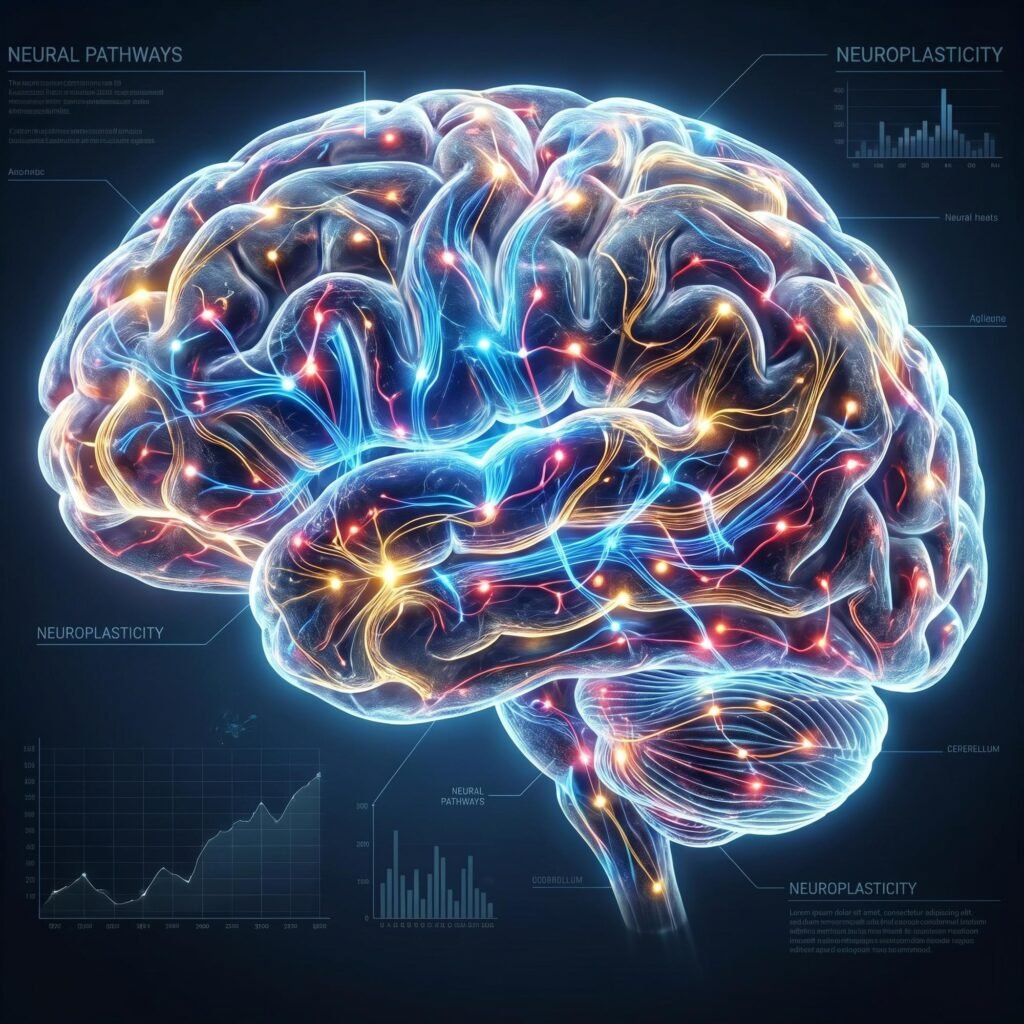
What Is Actually Happening Inside Your Brain Right Now
Most people see burnout as a minor problem. You feel exhausted. You feel disconnected. You feel like you’ve run out of something important and can’t find where to refill it.
What most people don’t know is that burnout and anxiety produce measurable, physical changes inside the brain.
When the brain is under prolonged stress, the prefrontal cortex, which handles rational thinking, emotional regulation, and perspective, gradually becomes less effective at its job. At the same time, the amygdala, the part of your brain that acts as a threat detection system, becomes overactive and hair-trigger sensitive.
The result is a nervous system that interprets ordinary things as emergencies.
An unanswered message produces unnecessary stress. A small task feels enormous. You snap at someone and immediately know the reaction was out of proportion, but in the moment it felt completely justified.
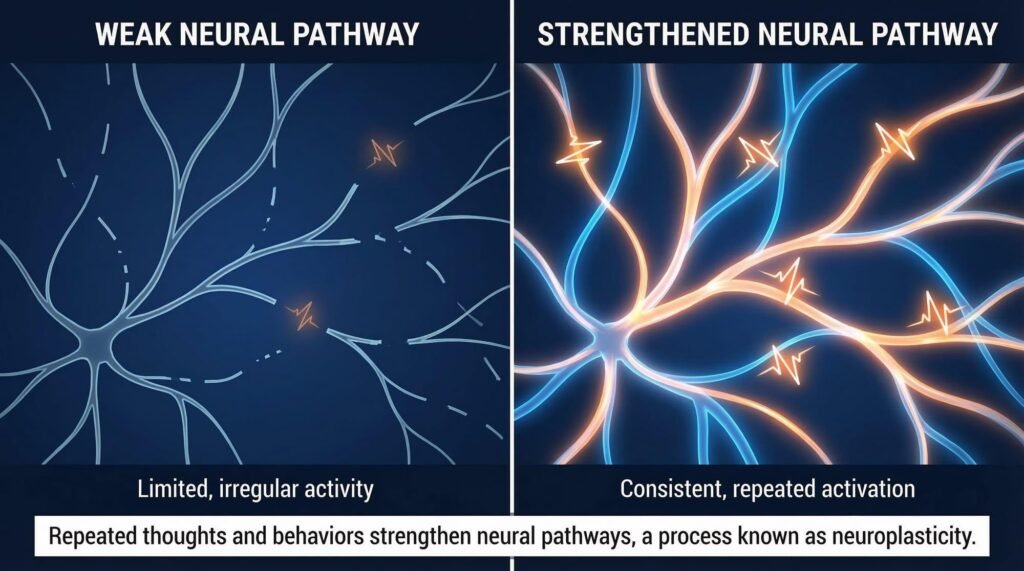
Your Brain Learned These Patterns. Which Means It Can Learn Different Ones.
Here’s the part that genuinely changes things for people when they understand it properly.
The brain is always learning. Your brain gets more efficient at whatever it practises most. If you’ve been running an anxiety response to everyday situations for months or years, your brain hasn’t failed. It has been optimized. It has built deep, fast, well-worn pathways for that anxiety response, and it uses them automatically now because that’s what efficient brains do.
This sounds discouraging. It isn’t, once you hear the rest of it.
The same mechanism that wired those patterns in can also wire them out. The power of neuroplasticity is precisely this: the brain’s ability to restructure itself in response to experience does not switch off in adulthood. It remains available. And with the right kind of structured, consistent input, it can be used deliberately to build different patterns, regulated ones, measured ones, ones that don’t interpret an ordinary Tuesday as a five-alarm situation.
Why Medication and Rest Are Not Enough on Their Own
A lot of people arrive at our clinic having already tried the obvious things. Time off. Anti-anxiety medication. Cutting back on commitments. And those things are not wrong. Rest is necessary. Medication, for many people, creates the stability needed to do deeper work. Nobody here is dismissing them.
But here’s what they don’t do. They don’t change the patterns that caused the burnout in the first place.
When you take two weeks off and come back, you come back with the same brain. Rested, yes. But still wired the same way, still running the same patterns, still sitting in the same nervous system that burned out before.
Rest treats the state. Neuroplasticity therapy treats the pattern. That’s a fundamental difference, and it’s why the outcomes are different too.
How Neuroplasticity Therapy Actually Works in Practice
Neuroplasticity therapy is not a single technique. It’s a structured combination of approaches, chosen and adjusted based on where a person actually is, what their specific pattern of anxiety or burnout looks like, and what their nervous system responds to best.
The early phase is mostly about bringing the system down from chronic high-alert. Before the brain can build new patterns effectively it has to come out of survival mode first. This involves breathwork done in specific ways to directly influence the autonomic nervous system. Somatic grounding techniques that help anchor the nervous system in the present rather than in the anxiety loop running in the background.
Then the deeper work begins.
Identifying what actually triggers the anxiety response, not the obvious big things but the smaller, subtler cues the brain has learned to treat as warnings. Catching the thought patterns that amplify the response before they’ve built to full volume. This part takes longer and asks for more from the person doing the work. But the changes it produces are structural and more permanent.
The Moment People Notice Something Has Actually Changed
People going through this process often describe a particular experience at some point.
They’re in a situation that would normally produce a significant anxiety spike, and instead of being pulled straight into it, there’s a pause. A fraction of a second of space between the trigger and the reaction.
A moment where a choice exists that simply wasn’t there before.
That space is neuroplasticity working its magic. It’s the new neural pathway being used instead of the old one. Still new. Still fragile in the early stages. But each time it’s used it becomes a little more established, a little more automatic.
What the Power of Neuroplasticity Means for Your Recovery
The power of neuroplasticity is not a concept reserved for people recovering from strokes or significant neurological events. It is available to anyone whose brain has learned patterns that are no longer serving them, and that very much includes the patterns that maintain chronic anxiety and burnout.
Recovery is not about undoing years of stress overnight.
It is about consistently providing the brain with the kind of input that supports the growth of different pathways. The brain, given the right conditions and consistent practice, does the actual rewiring. Your job is to show up for the process and stay engaged with it even on the days when progress feels invisible.
If You’ve Been Carrying This Longer Than You Should Have Had To
Burnout has a way of feeling permanent from the inside. Like something that can’t be recovered, only managed.
That feeling is real. It is also not the full picture.
What’s actually happened is that a set of neural patterns have become very well established in a nervous system that has been under sustained pressure for a long time. This pattern can be changed with structured, evidence-based work that reaches the level where the patterns actually live.
If you’re ready to work on what’s underneath rather than manage what’s on the surface, book a consultation at Fit O Fine. Let’s have an honest look at where you are and build something that genuinely lasts.
FAQs
Q1. Does neuroplasticity therapy replace medication for anxiety?
No. It works alongside medication and often reduces reliance on it over time as patterns shift.
Q2. Can burnout cause permanent brain changes?
Burnout causes real but reversible changes. The brain’s plasticity makes genuine recovery possible.
Q3. Why is physical movement part of brain recovery?
Exercise stimulates new brain cell growth and regulates the nervous system, both essential to recovery.
Q4. How do I book a consultation at Fit O Fine?
Visit fitofine.com or call +91 6295115701 to get started.