
 +91 6295115701
 fitofine.in@gmail.com
 27A, Town Hall Para, Bardhaman, West Bengal
Why Does My Knee Hurt When Sitting Cross-Legged?
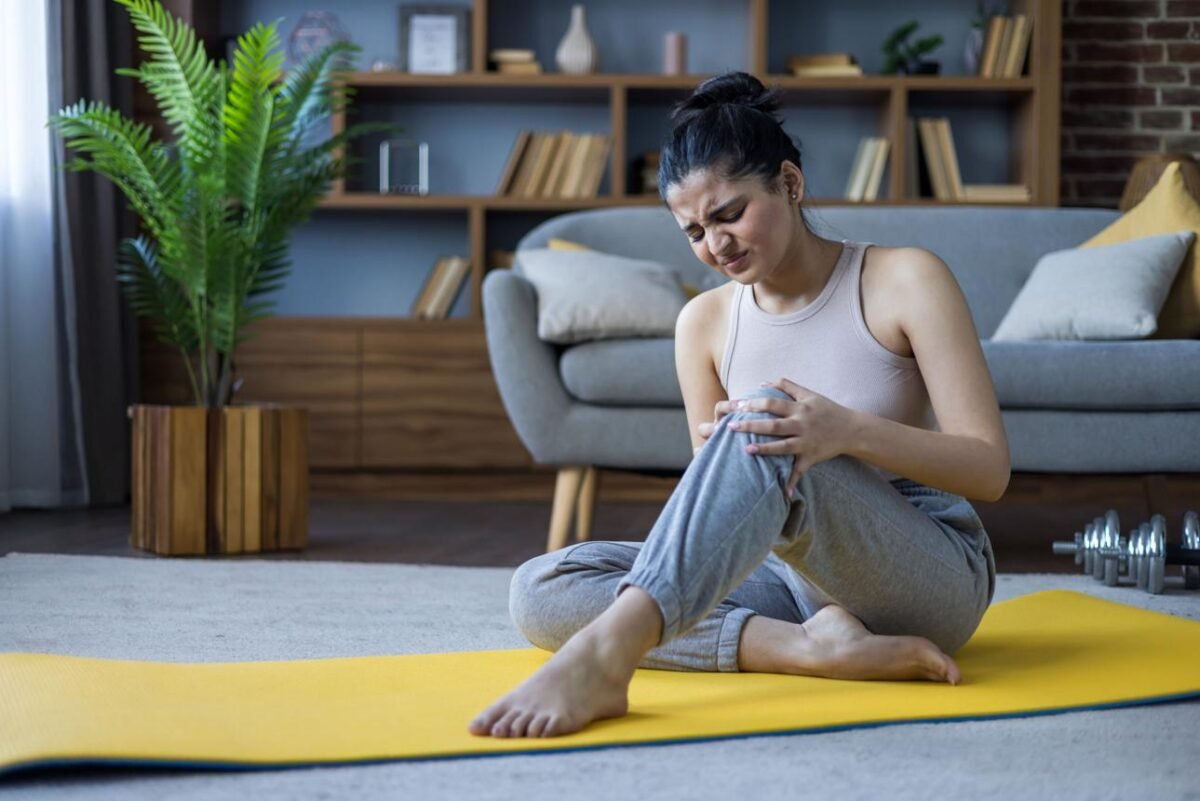
You sit down on the floor, fold your legs and a few minutes in the knee starts nagging at you. Maybe it’s a dull ache around the kneecap. Maybe it’s a pull along the inside of the joint. Or maybe you’re fine while sitting and the trouble only starts when you try to stand up.
A lot of people come to us with exactly this. They walk without any problem, but the floor is a different story. Our orthopedic physiotherapy services focus on helping people manage joint pain and improve movement.
First, the good news. Sitting cross-legged doesn’t wreck your knees. For most people it’s a perfectly ordinary way to sit. The real question is why it hurts you and whether that pain is a one-off or keeps coming back.
Why this posture asks so much of your leg
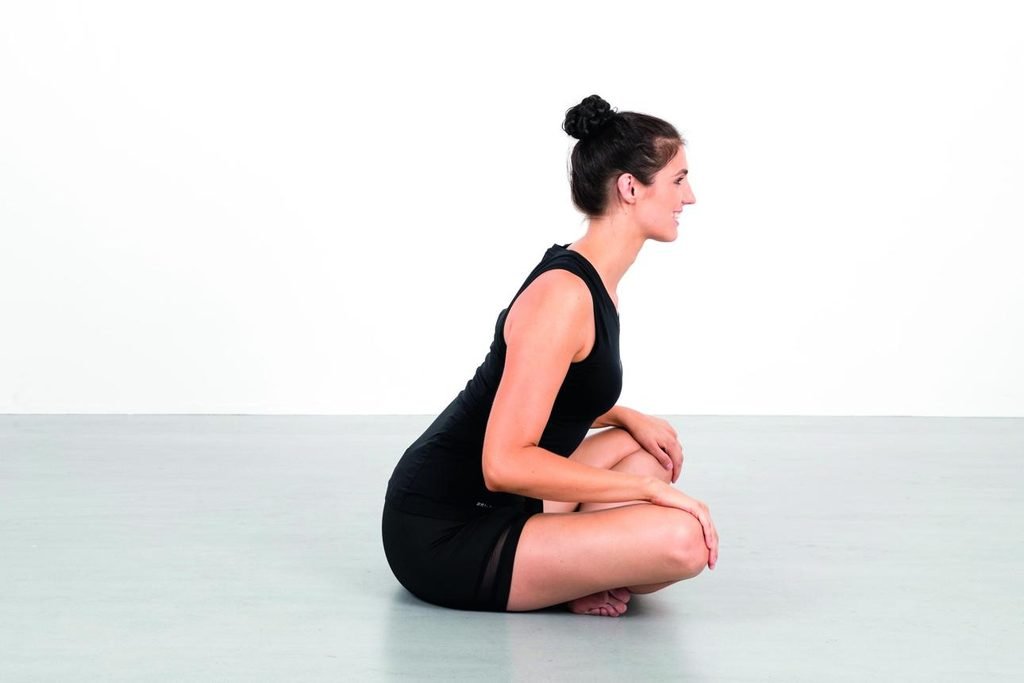
Sitting cross-legged is more demanding than it looks. Your knee has to stay deeply bent and your hip has to turn outward at the same time. If either joint is stiff, weak or sore, you’ll feel it quickly.
That doesn’t mean something is damaged. Sometimes the position simply shows up a limitation that walking never tests. Other times it irritates a problem that was already there, like a cranky kneecap, early arthritis or a sensitive meniscus. This is also why one person can sit on the floor for two hours while another gives up after five minutes.
What could be going on
There’s rarely a single answer, but these are the most common causes.
A kneecap that doesn’t like deep bending: On a chair your knee bends only a little. On the floor it stays deeply bent for a long time. If the tissues around your kneecap are already touchy, that’s when they complain. People with this often notice the same pain on stairs, when squatting, or when getting up from a low seat. Doctors and physios call it patellofemoral pain.
A stiff hip: This one gets missed all the time. If your hip doesn’t turn outward easily, the knee ends up taking strain it wasn’t built for. The pain shows up in the knee, but the cause is sitting a little higher. It’s a big reason we examine the whole leg, not just the sore spot.
Arthritis: Osteoarthritis of the knee can make deep bending stiff and painful. But please don’t leap from “my knee hurts when I sit cross-legged” to “I have arthritis.” One symptom isn’t enough to say that and plenty of people with arthritis sit cross-legged without trouble.
Meniscus or other joint irritation: Pain along the joint line, particularly with swelling, catching or locking, needs a proper look. A painless click now and then is very common and usually nothing to lose sleep over. Clicking with pain, or a knee that sticks and won’t fully bend or straighten, is a different matter.
Weak muscles: The quadriceps at the front of your thigh and the glutes in your hips help control how your leg moves. When they’re not doing their share, some positions become harder to tolerate. That’s why good rehab isn’t only about stretching the sore area. Strength matters just as much.
Why it’s often worse when you get up
Many people tell us the worst part isn’t sitting at all. It’s the first few steps afterwards, when the knee feels stiff and awkward before it slowly loosens up.
That’s common after holding the knee bent for a while and it can also be a sign of an underlying joint or movement problem. What counts is the pattern. If it happens once in a while, there’s probably no cause for concern. If it’s becoming regular, or you’ve started avoiding the floor, stairs or squatting because of it, it’s time to take it seriously.
Is it arthritis, then?
Not necessarily. It can be, but plenty of younger people with otherwise healthy knees get pain in deep bending too. Tight joints, weak muscles, an old injury or an irritated kneecap can all do it.
Rather than trying to work out the diagnosis from one position, think about how the knee behaves across your day. How does it feel walking, on stairs, squatting, getting out of a chair, or when you exercise? That wider picture tells you far more than the cross-legged pose alone.
What you can do for now
Don’t force it. If the knee hurts, pushing it toward the floor to prove you can sit “properly” won’t help.
Try small changes instead. Sit with your legs folded less deeply. Put a cushion under your hips so they sit a bit higher than your knees. Stretch your legs out every now and then if you’ll be down there for a while. It’s also worth noticing whether one side is always worse than the other.
And keep moving. For most knee problems, the right kind of activity helps recovery more than rest does. For knee osteoarthritis, NICE guidance recommends exercise that’s tailored to the person, including strengthening and general aerobic activity.
Which exercises help?
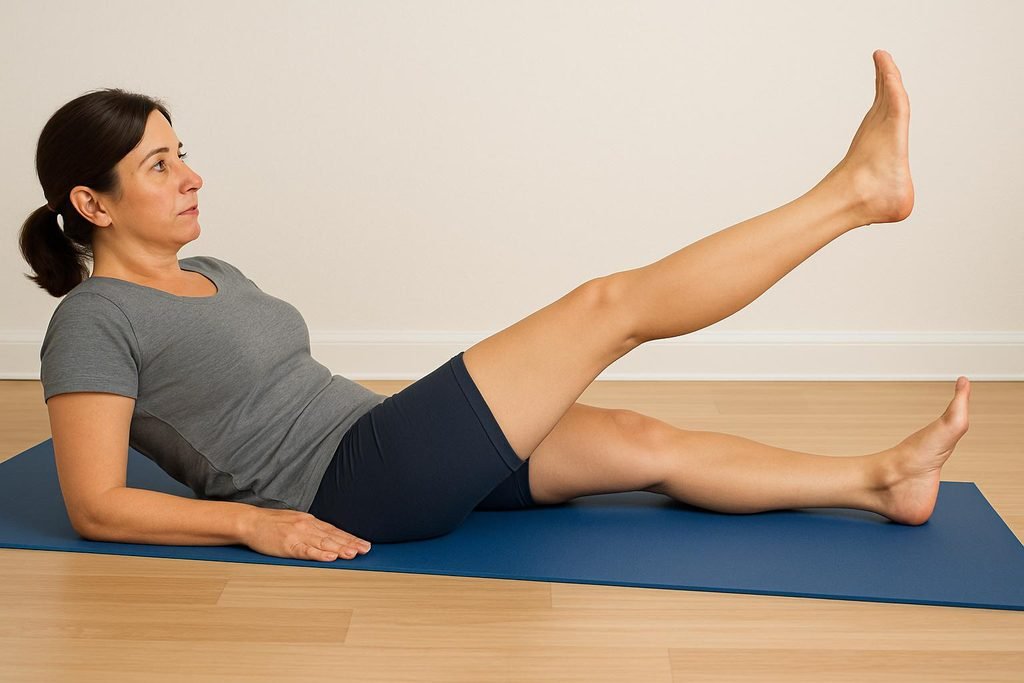
There’s no single exercise that works for every sore knee. It depends on what’s behind your pain. After an assessment, a physiotherapist might work with you on:
- Strength in the front of the thigh
- Strength in the hips and glutes
- Mobility in the knee and hip
- Balance and control when you move
- A gradual return to squatting and floor sitting
The goal isn’t just a stronger knee. It’s a leg that copes with everyday loads more comfortably. If your knee is noticeably swollen, you’ve recently injured it, it locks, or you struggle to move it, don’t pick exercises off the internet. Get it checked first.
When to see a physiotherapist
If the pain keeps returning, is slowly getting worse, or is getting in the way of normal life, an assessment can tell you what’s actually happening. Book sooner if you also notice any of these:
- Swelling in the knee
- Stiffness that doesn’t ease off
- Pain on stairs, while walking or when squatting
- Clicking that comes with pain
- Catching, locking, or a feeling that the knee might give way
- A knee injury in the past
A physio looks well beyond the painful spot. We check how the knee moves, how strong the leg is, how the hip is working and how you handle ordinary tasks like getting up from the floor.
Knee pain physiotherapy in Bardhaman
At Fit O Fine Physiotherapy Clinic, we don’t treat a knee as just a sore joint. We offer orthopedic physiotherapy and rehabilitation for knee pain, osteoarthritis and recovery after surgery. Depending on what you need, your treatment may include a full assessment, therapeutic exercise, manual therapy and other physiotherapy methods.
If sitting on the floor, climbing stairs, walking or exercising has gradually become uncomfortable, it’s better to find out what’s holding you back than to keep working around it.
The bottom line
Knee pain when you sit cross-legged doesn’t mean your knee is damaged or that you have arthritis. Sometimes the position just exposes a limit you never noticed while walking. The cause might be a stiff knee or hip, weak muscles, an irritated kneecap, arthritis or an old injury.
Don’t panic, but don’t keep forcing a painful position either. If your knee complains every time you sit this way, it’s trying to tell you something and it’s worth finding out what.
Frequently asked questions
Q1. Why does my knee hurt when sitting cross-legged?
This position bends your knee deeply and turns your hip outward at once. If either joint is stiff, weak, irritated or already affected by a condition, the posture can bring on pain.
Q2. Is sitting cross-legged bad for your knees?
Not on its own. Many people sit this way their whole lives. There’s just no reason to keep doing it if it hurts. What’s causing the pain matters more than the position.
Q3. Why does my knee hurt when I sit on the floor?
Floor sitting usually bends the knee much further than a chair does. Limited mobility, weak muscles, kneecap pain or arthritis can all make that more noticeable.
Q4. Can arthritis cause knee pain when sitting cross-legged?
Yes, osteoarthritis can cause pain and stiffness with deep bending. But the pain alone doesn’t prove you have it, and there are other possible causes.
Q5. Can physiotherapy help?
Often it can, depending on the cause. Treatment usually focuses on knee and hip mobility, strengthening, movement control and gradually building up your tolerance for the activities that hurt right now.
Q6. Should I stop sitting cross-legged if it hurts?
You don’t have to give it up for good. For now, avoid forcing a painful range, change position often and get assessed if the pain keeps coming back or starts affecting your daily routine.
Q7. When should I get medical help?
Get prompt medical attention if your knee becomes severely painful or badly swollen, locks, repeatedly gives way, cannot bear your weight, looks misshapen after an injury, or becomes hot and red with a fever.