
 +91 6295115701
 fitofine.in@gmail.com
 27A, Town Hall Para, Bardhaman, West Bengal
Frozen Shoulder Physiotherapy: Symptoms, Treatment & Recovery Timeline
You go to grab a glass out of an upper cupboard or reach back to pull your seatbelt over and out of nowhere, your arm just stops. There’s a sudden, sharp ache right in the joint that takes your breath away for a second. At first, you figure you probably just slept on it funny or pulled something moving furniture over the weekend. You tell yourself to give it a few days of rest and it’ll work itself out.
Except three weeks go by and suddenly basic stuff keeps getting harder. Brushing your hair turns into a chore. Getting a coat on requires awkward twisting. You spend half the night tossing around trying to find a position that doesn’t trigger a dull throbbing pain down your arm.
That persistent feeling usually isn’t a simple muscle pull. It’s almost always the beginning of a frozen shoulder. And what happens when you catch it early tends to catch people off guard in the best possible way.
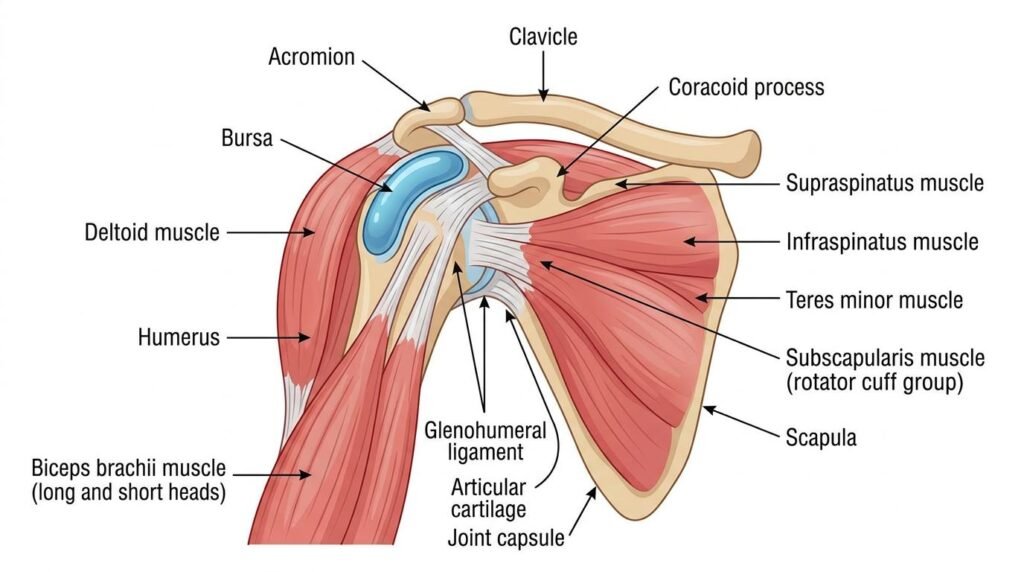
What Is Actually Going On Inside Your Joint
If you look at the anatomy, medically they call this adhesive capsulitis. What that really means is the flexible capsule wrapping around your shoulder joint has lost its elasticity.
Think of that capsule like a loose sleeve. Normally, it gives your upper arm bone plenty of room to glide, spin and reach overhead. When a shoulder freezes, that sleeve gets inflamed and starts thickening up. Scar tissue forms inside, tightens everything down and shrinks the actual space inside the joint. So when you try to lift your arm past a certain point, you literally hit a hard wall.
This doesn’t happen overnight like a sudden tendon tear during sports. It creeps up on you over weeks. It starts as a mild, annoying ache and slowly turns into rigid stiffness. It almost always affects just one side at a time, though some people end up getting it in the other shoulder years later. Most people who deal with this are between forty and sixty years old and women end up with it slightly more often than men.

The Three Phases Everyone Goes Through
The strange thing about frozen shoulder is how predictably it moves through three separate stages.
First is the freezing phase. Pain is the biggest issue here. Because moving your arm hurts, you naturally start holding it still against your side. The tricky part is that stopping movement actually speeds up the stiffening process. The pain gets worse in the evening, sleeping on that side becomes nearly impossible and your arm’s range of motion slowly shrinks. This phase usually drags on anywhere from six weeks to nine months.
Then comes the frozen phase. The constant ache might ease up a bit, but the joint hits peak stiffness. Your arm feels locked. Simple tasks like dressing yourself, driving, or reaching into a back pocket take real effort. This middle stretch typically lasts four to twelve months.
Finally, you hit the thawing phase. This is where the capsule tissue finally begins to loosen its grip. Flexibility comes back bit by bit, your strength returns and daily routines start feeling normal again. Full recovery here can take six months to two years depending on how stiff things got and how fast you started getting treatment.
Signs Worth Taking Seriously
Child development has milestones and shoulder health has clear warning patterns that are worth paying attention to rather than filing away under let’s wait and see.
A persistent, deep ache around the outer shoulder joint that gets worse at night. Not being able to raise your arm overhead even when someone else physically tries to lift it for you. Struggling with simple everyday movements like putting on a jacket or reaching behind your back. Waking up repeatedly because putting any weight on that arm causes sharp pain.
If you’ve been sitting with shoulder pain and growing stiffness for more than two weeks, waiting around for it to fix itself usually just drags out the overall timeline.
Why This Keeps Happening to People
Nobody can pinpoint one single reason for every case, but keeping a shoulder still for too long combined with underlying inflammation is the main culprit.
If you’re recovering from a rotator cuff injury, a broken wrist, or shoulder surgery, keeping your arm immobilized in a sling gives the joint capsule a chance to tighten up fast.
People living with diabetes also run a much higher risk. High blood sugar levels change how collagen behaves in the body, making connective tissues stiffer and more prone to swelling. Thyroid issues, hormonal shifts during menopause, or recovering from a stroke also set up the right conditions for a shoulder to lock up.
Why Early Intervention Physiotherapy Changes Everything
A lot of people walk into a clinic assuming they just have to live with the stiffness until it eventually goes away on its own. But physical therapy doesn’t just mask the pain—it directly targets the physical tightness holding the joint back.
A therapist looks at where you are in the process and what specific movements are blocked. Treatment relies on gentle, hands-on joint glides to stretch that tight capsule safely in ways you can’t do by yourself. As flexibility comes back, targeted exercises rebuild the smaller stabilizing muscles around your shoulder blade and rotator cuff.
Therapists also use heat, cold, posture work and soft tissue release to keep pain down so you can actually do the exercises. Doing your home routine regularly makes a massive difference in how fast the joint opens back up.
Gentle Exercises That Help Get Things Moving
Doing movements at the right stage is what counts. Forcing painful stretches too hard will just inflame the joint more, so keeping things controlled is key.
For pendulum swings, lean forward slightly and support your body on a table with your healthy arm. Let the sore arm hang straight down, completely relaxed. Move your torso slightly to let the arm swing in small, easy circles. This opens up joint space without straining tight muscles.
For finger walks, stand facing a wall and slowly walk your fingers upward as far as comfortable before walking them back down. It helps build confidence reaching overhead.
The cross-body stretch involves gently pulling your affected arm across your chest with your good hand to loosen the back of the shoulder. And the towel stretch—holding a towel behind your back with both hands and gently pulling upward with your top hand—helps bring back internal rotation for dressing.
What the Recovery Timeline Actually Looks Like
Everyone wants to know when they’ll get their arm back and the answer comes down to severity and timing.
Mild cases caught early during the freezing stage often see real improvements within six to twelve weeks of consistent care. Moderate cases with solid stiffness usually take three to six months of regular work. Severe cases where treatment was delayed for months can take twelve to twenty-four months to resolve completely. Getting started early almost always cuts down the total time you spend dealing with it.
When to Stop Waiting and Get Help
There’s a very specific kind of frustration that comes from living with a joint that won’t move, sitting around wondering every morning if it’s getting better or worse.
You don’t need to suffer through months of limited movement hoping it magically fixes itself. If your shoulder stiffness has been bothering you for more than a couple of weeks, that’s reason enough to get a proper assessment. An evaluation will either put your mind at rest or get an actual recovery plan going.
At Fit O Fine Physiotherapy, we provide individual assessments and evidence-based rehabilitation for frozen shoulder. Whether you’re noticing early stiffness or dealing with months of limited movement, our team is here to guide you step by step back to pain-free motion. Book your consultation today and take the first step toward getting your normal life back.
Frequently Asked Questions
Q1.Can frozen shoulder heal without physical therapy?
It might eventually loosen up on its own after two or three years, but waiting it out usually leaves you with permanent movement limits. Therapy speeds up recovery and protects overall joint function.
Q2. Is frozen shoulder permanent?
No. Almost everyone regains full or near-full movement with proper treatment and consistent care.
Q3. Are physical therapy exercises supposed to hurt?
You’ll feel mild strain during stretches, but sessions should never cause sharp or severe pain. Your therapist keeps everything within a safe limit.
Q4. Will I end up needing surgery?
Rarely. More than ninety percent of cases resolve completely through non-surgical physical therapy and guided exercise.
Q5. Can it come back after it heals?
It’s very rare for it to return in the exact same shoulder. However, people with conditions like diabetes have a slight chance of developing it in the opposite shoulder down the road.